About
"When a show was live, it was live. That was it. Then the main thing was we all had to get it right."
In his four-and-a-half-hour interview, Stewart MacGregory (1917-2007) discusses his early years as a radio sound effects specialist. He remembers being called to active duty during World War II, where he served as a cryptologist for the military. He talks about starting his television career at NBC working on the production team of live shows including Chevrolet on Broadway, Kraft Television Theatre, and Philco Television Playhouse. MacGregory outlines becoming one of four unit managers for NBC's Wide Wide World, a show that consisted of live remotes from around the country hosted by Dave Garroway. He outlines his time as unit production manager on a variety of other programs and specials including The Bell Telephone Hour, the 1960 Democratic and Republican Conventions, Kraft Music Hall, Today, The Doctors, and Saturday Night Live. He recounts later joining NBC's business affairs department before retiring in 1983. Michael Rosen conducted the interview on June 28, 1999 in Larchmont, NY.
Highlights

Stewart MacGregory on the infamous "water closet incident" from The Tonight Show with Jack Paar
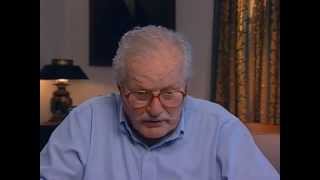
Stewart MacGregory on the atmosphere and logistics of a live television broadcast

Stewart MacGregory on acting as unit manager for NBC's coverage of the 1960 Presidential Elections
Stewart MacGregory on going to work for The Kraft Music Hall with Perry Como and traveling to Dallas to film the day after John F. Kennedy was shot

Stewart MacGregory on what represents the best of television
Full Interview
Chapter 1
On his early life and influences; on radio shows he listened to; on attending Emerson College
On seeing television at the 1939 World's Fair; on New York City in the early '40s; on getting into radio in New York and the onset of World War II
Chapter 2
On his time doing sound effects for NBC radio; on radio shows he worked at on NBC; on the process of creating sound effects for radio shows
On his experiences in World War II; on returning to NBC radio after World War II; on going to work for NBC television
Chapter 3
On being stage coordinator for NBC Television starting in 1948; on the early attitude toward people working in the television industry; on the duties of a stage coordinator
On acting as stage coordinator for Chevrolet on Broadway; on Chevrolet on Broadway being a live presentation
Chapter 4
On the atmosphere and logistics of a live television broadcast; on the cameras and other equipment used in the Golden Age of Television; on being stage coordinator for Americana and Barney Blake, Police Reporter
On being stage coordinator for Kraft Television Theatre produced by David Susskind; on being stage coordinator for Philco-Goodyear Television Playhouse; on being stage coordinator for Armstrong Circle Theatre
Chapter 5
On acting as stage coordinator for Armstrong Circle Theatre and Martin Kane, Private Eye; on live commercials for Kraft Television Theatre
On how the advent of color affected his job as stage coordinator; on acting as unit manager of Wide Wide World
Chapter 6
On Dave Garroway, host of Wide Wide World; on the technical aspects of being a unit manager on Wide Wide World; on the cancellation of Wide Wide World
On being unit manager on the Bell Telephone Hour; on the types of acts that appeared on the Bell Telephone Hour
On acting as unit manager for NBC's coverage of the 1960 Presidential Elections; on being unit manager on The Tonight Show with Jack Paar
Chapter 7
On Ray Bolger on The Bell Telephone Hour; on the infamous "water closet incident" from The Tonight Show with Jack Paar; on going to work for The Kraft Music Hall with Perry Como and traveling to Dallas to film the day after John F. Kennedy was shot
On working with Perry Como on The Kraft Music Hall; on working with Jack Paar on The Jack Paar Program; on becoming a unit manager for NBC Sports in 1964
Chapter 8
On being unit manager for the 1966 World Series; on being unit manager for Today; on being unit manager for The Doctors
On being unit manager for NBC: The First Fifty Years; on being unit manager for Saturday Night Live
Chapter 9
On joining NBC's Business Affairs department in 1978; on what represents the best of television; on the then-current state of NBC; on the Hollywood Blacklist
On the difference between a unit manager and a production manager; on his mentors; on various people with whom he worked in his career and his wife, Betty
On b-roll pictures from his career- on the set of Armstrong Circle Theater; the set of the Armstrong Circle Theater; on location for Wide Wide World